
MIPIM 2026, Genova review: international interest goes beyond real estate
Last week, Genoa took advantage of the international stage offered by MIPIM to present its urban development strategy and the projects that are reshaping the future of the city. The interest shown by investors, developers, and industry operators once again confirmed the growing attractiveness of the Ligurian capital.
Great interest was expressed in the renovation and redevelopment project for the Luigi Ferraris Stadium—set to become a multifunctional infrastructure usable year-round—as well as in the Carlini‑Bollesan multipurpose stadium and the Granarolo‑Begato vertical sport park project. Significant attention was also drawn to the innovative territorial marketing and urban regeneration model of Distretto 121: a new district in the heart of the city where technological experiences, craftsmanship, personal care, work, and food experiences converge, making the city center attractive and safe, supported by a dedicated light‑design project.
The projects were presented by the Mayor of the City of Genova during the conference held at the Workshop Arena of the Italian Pavilion, together with the Councillor for Trade and Crafts, Territorial Marketing, and Tourism, as well as Nomisma S.p.A. and Cassa Depositi e Prestiti S.p.A., who illustrated the city’s strategic vision and several indicators demonstrating its economic and social growth and development.
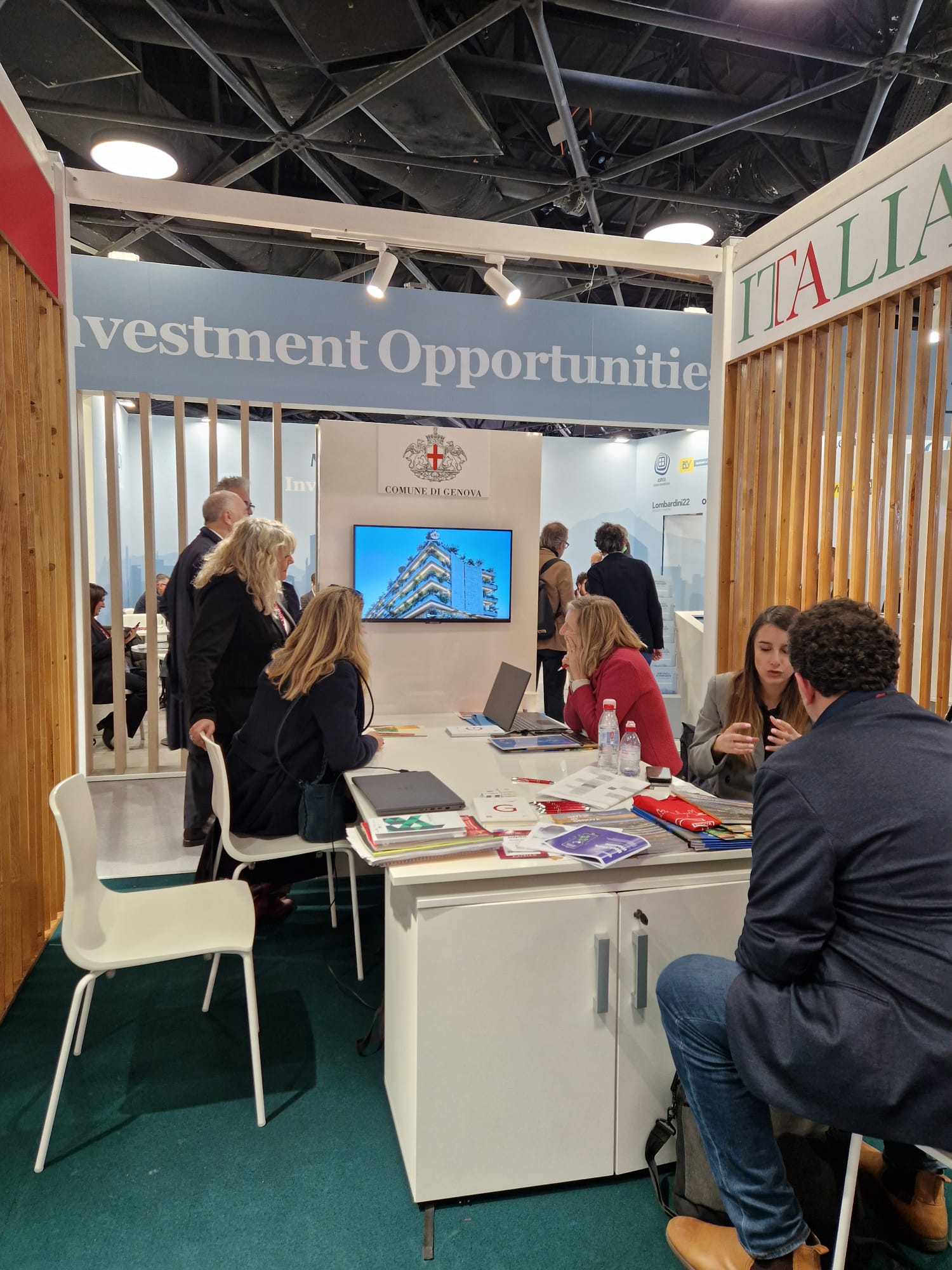
Genova’s presence at MIPIM was also marked by intense networking activities: over 100 B2B meetings were held at the City of Genova’s desk inside the Italian Pavilion, where the 2026 edition of the “Invest in Genova” book quickly ran out—evidence of strong, concrete interest in the opportunities presented.
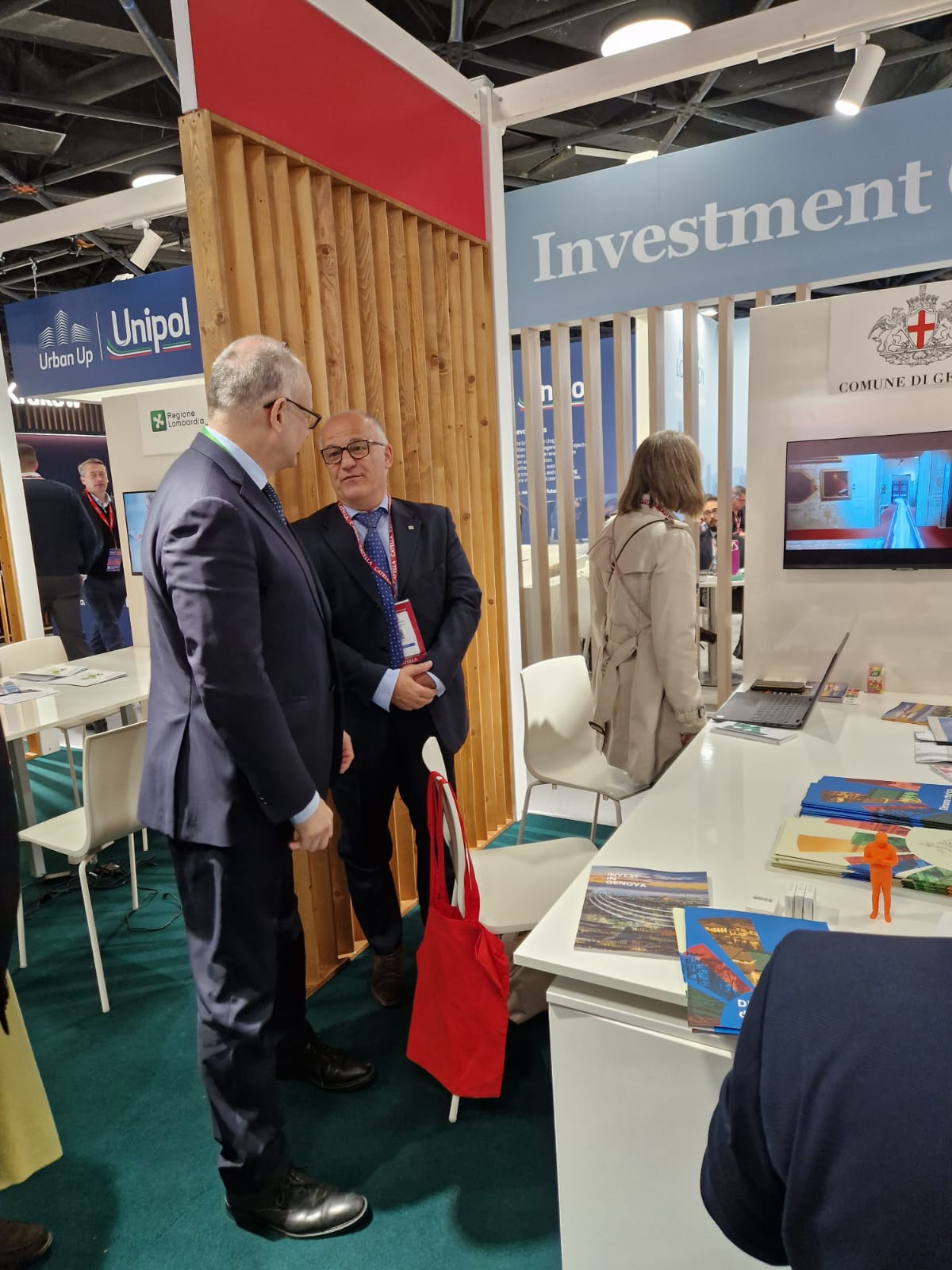
During these meetings, highly qualified and diverse stakeholders were involved, including international investment funds such as Kervis SGR S.p.A., DeA Capital SGR, Ardian, and PIMCO Prime Real Estate; investment and strategic consultancy firms including FDI Research, Tractus, and Kroll Advisory S.p.A.; institutions such as the Mayor of Rome, representatives from Invest in Bologna, and a delegate from the Tunisian government; and major architecture firms interested in complex urban projects, such as Herzog & de Meuron and ATI Project. There was also extensive engagement with developers of digital solutions aimed at enhancing Genova’s real estate offering at a global level, including MRI Software and Traent, as well as with operators specializing in city promotion and architectural representation, such as The Leisure Way and 3D & Architectural Models.
Numerous collaborations have already been launched, confirming Genova’s role as a key player in a transformative journey toward a city that is increasingly smart, green, and people‑centered—capable of combining innovation, quality of life, and sustainability within a competitive urban model recognized internationally.
Edited by Irene Bellotto.
 Italiano