
Genova looks to the future of logistics: infrastructure, the Free Logistics Zone (ZLS) and regeneration take centre stage at the 80th Spediporto General Meeting
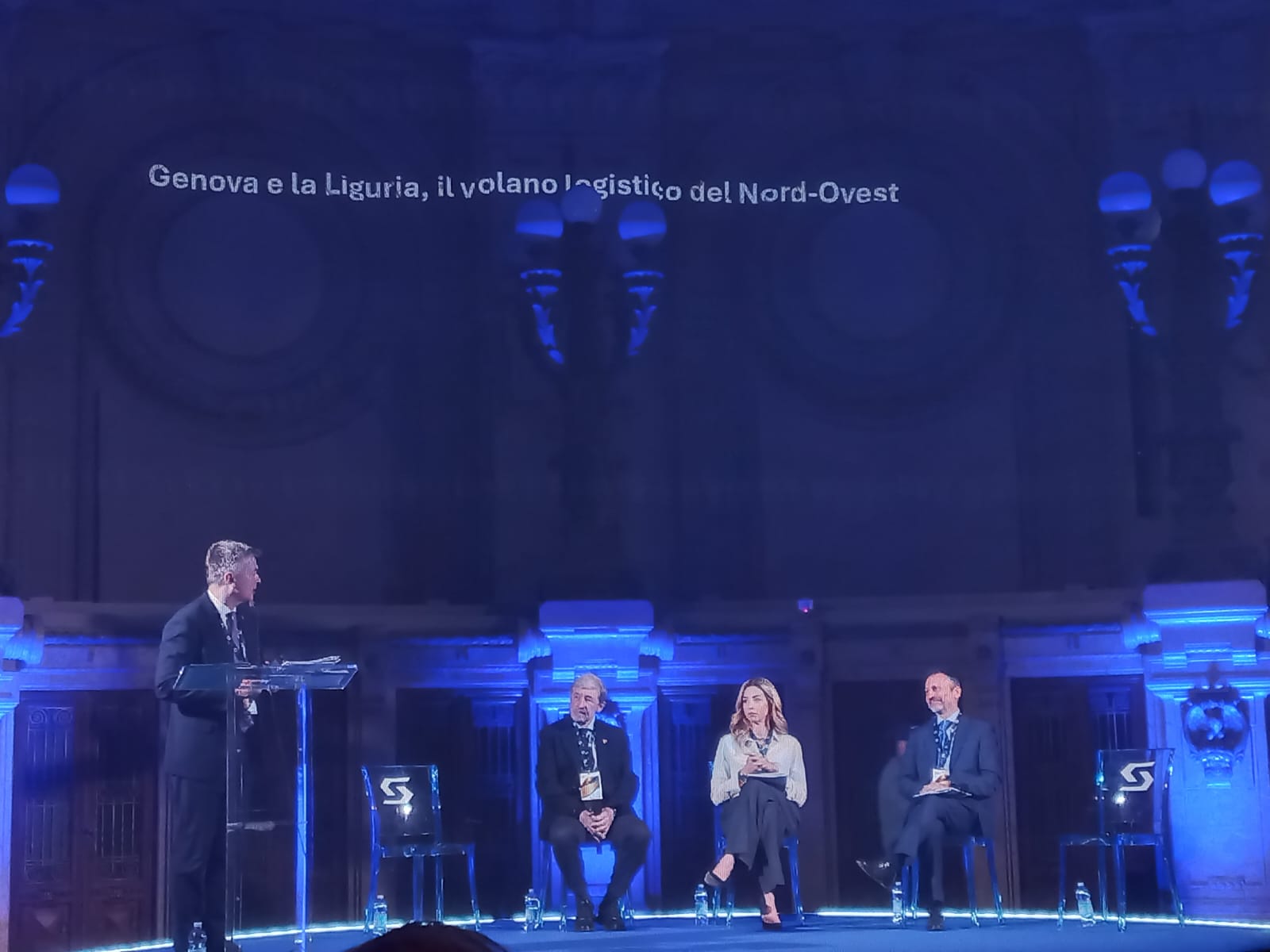
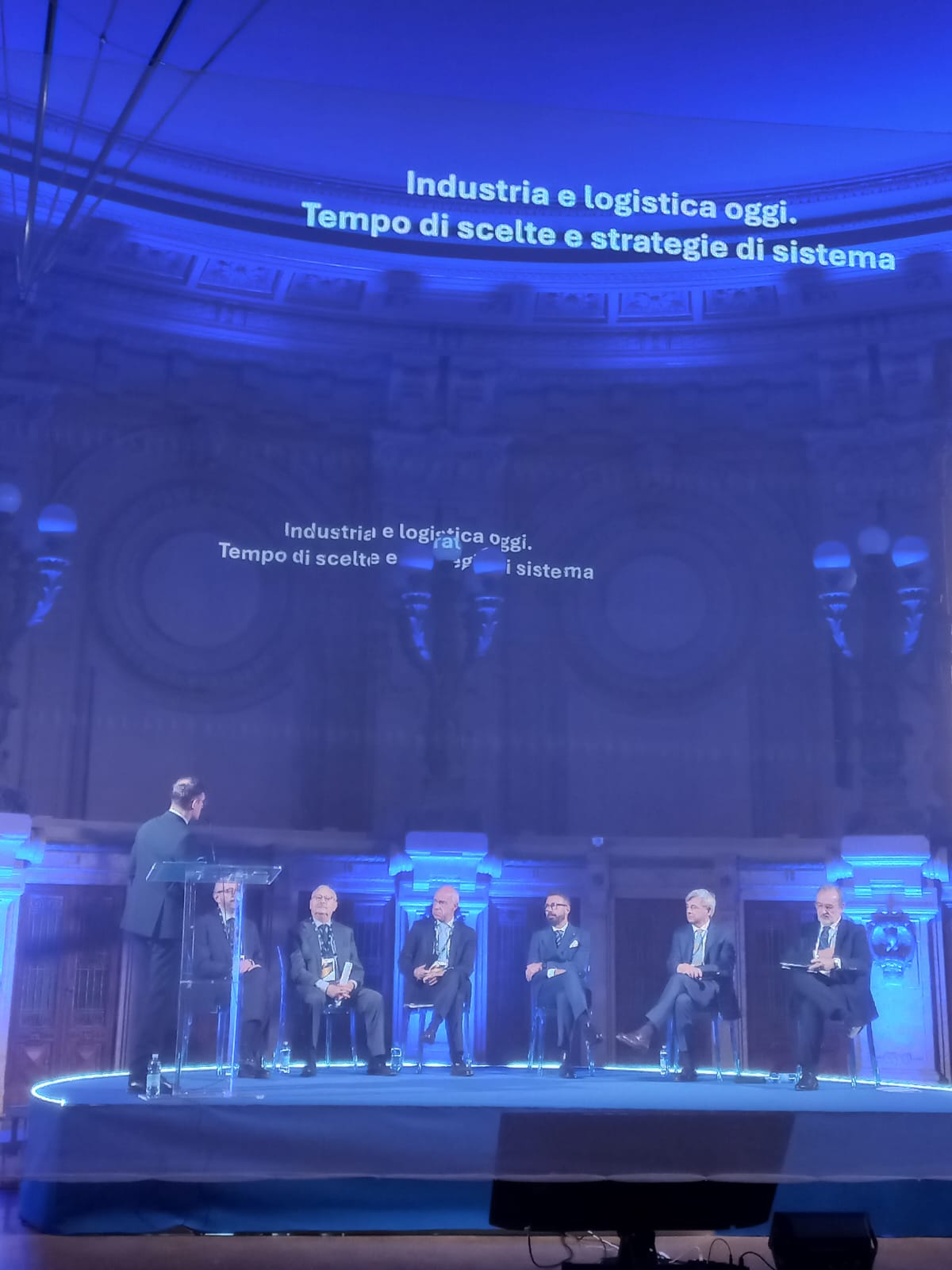
On 27 April 2026, the Sala delle Grida at the Palazzo della Borsa Valori of Genova hosted the 80th public meeting of Spediporto, the association of transport, freight shipping and logistics companies operating in the Port of Genova. This significant anniversary was celebrated by addressing key issues affecting the global, European, Italian and Ligurian economies, in the presence of Mayor of Genova Silvia Salis. During the event, the Executive Board’s Annual Report was presented, describing a complex phase in global trade characterised not by a lack of trade but by a growing fragmentation of the political landscape: according to the ICE Report 2024–2025, 2025 saw a 0.2% contraction in the volume of global merchandise trade, within a less transparent and more conflictual context, an assessment shared by the World Bank, the United Nations and Fedespedi based on the January 2026 World Economic Outlook. Among the main ‘bottlenecks’ is the energy crisis, which impacts industrial costs, consumer prices, shipping rates, interest rates, the cost of foreign debt and investor confidence; a new economy of tension fuelled by multiple fracture lines – the Russia-Ukraine war, the Israeli-Palestinian crisis, the US-China confrontation, the return of protectionism, competition over rare earths, semiconductors and critical technologies, and the growing militarisation of infrastructure – now makes not only ‘efficiency’ but also ‘reliability’ central.
At European level, whilst remaining a major industrial and commercial area, vulnerabilities are evident, such as energy dependence, technological lags, insufficient investment in infrastructure, weak growth, fragmentation of the internal market and slow decision-making; In this scenario, Italy ranks at the bottom of the table, with real growth estimated by the IMF at 0.5% in 2026 and 2027 and 0.8% in 2028, which is below the Eurozone and G7 averages and weighed down by a debt-to-GDP ratio higher than Greece’s in 2026, whilst retaining prospects for recovery thanks to ‘Made in Italy’ manufacturing, the Blue Economy and logistics, strategic assets for GDP growth. Liguria is showing signs of resilience and growth within a context that remains fragile and selective, linked to supply flows but with increasing competitiveness; together with Genova, it is competitive not only because of the port but when this is integrated with manufacturing, logistics, services, energy and human capital, including the strategic role of the airport, which is set to develop the integration of cargo services following recent positive results. Port competitiveness is now measured by the ability to serve goods rather than ships, ensuring reliable timings, efficiency and reliability of the supply chain, value-added services, adequate space and competitive rail and road connections: in this context, projects such as the Gronda and Terzo Valico are considered essential.
The 'Libro bianco sulle priorità infrastrutturali della Liguria 2025' sets out a clear hierarchy of priorities for Genova and for the country as a whole, proposing to turn infrastructural isolation into a competitive advantage and reiterating the need to view Genova as a complex platform linked to a broad value-generating area, including through the renewal of the 'Protocollo sulla Logistica del Nord-Ovest'; The port, dry port, customs simplification, Simplified Logistics Zone (ZLS), Customs Free Zone and road and rail connections must be integrated into a multi-year implementation plan that makes Genova a lever for industrial restructuring in the North-West. At regional and city level, the Simplified Logistics Zone has been identified as key to the development of the port and airport: Spediporto president Andrea Giachero emphasised that strengthening the central role of Liguria and Genova means completing the connecting infrastructure, defining a shared industrial project that combines strategic vision, energy and infrastructure development, job growth and social inclusion, revitalising industrial areas within the ZLS and undertaking international territorial marketing initiatives, including in the run-up to the 2026 CISCE in Beijing, where Liguria will be Guest of Honour on the themes of logistics and innovation, accompanying these initiatives with high-quality training programmes for young people.
The ZLS was also examined in detail by Maurizio Conti, Professor of Political Economy at the University of Genova, who highlighted Genova’s strengths – a major port, effective institutions, and a highly skilled workforce – whilst the Mayor of Genova, Silvia Salis, announced a strategic resolution for urban regeneration and the redevelopment of around thirty areas of the former industrial and residential system, which are disused or underutilised in the western part of the city (between the districts 'Pra'' and 'Sestri') and the Bisagno and Polcevera valleys. These are considered strategic resources for zero-land-consumption urban regeneration, in line with European guidelines and useful for increasing investment by addressing the shortage of space. The project involves the demolition of obsolete buildings and sustainable transformation, partly in light of the demographic decline and the presence of derelict sites, with diversified uses and public-private partnerships, ranging from storage to materials processing, with a focus on employment benefits; Among the tools that can be deployed are ZLS, incentives for urban regeneration, Regional Law 23/2018 and temporary amendments to the land-use designations in the PUC to increase flexibility and reduce processing times.
The Mayor also mentioned the plan to establish a vocational school for maritime professions and the Blue Economy, to promote employment and training, and the need to support energy-intensive businesses by focusing on solar and wind power, whilst addressing the issue of additional costs affecting all sectors. The President of the Liguria Region, Marco Bucci, reiterated the paradigm shift towards an approach centred on goods and the end customer, highlighting the competitive positioning of Italian exports and the importance of dry ports beyond the Apennines, such as in Piedmont, with a focus on goods management, infrastructure and systems integration.
It was highlighted that Genova must have the courage to take control of its own destiny in order to establish itself as the capital of the Mediterranean and Southern Europe.
Edited by Irene Bellotto, Arianna Morello and Emanuele Spinetta.
 Italiano