- 02 Mar, 2026
- MIPIM 26, Urban Regeneration
Portoria – Piccapietra – Pammatone
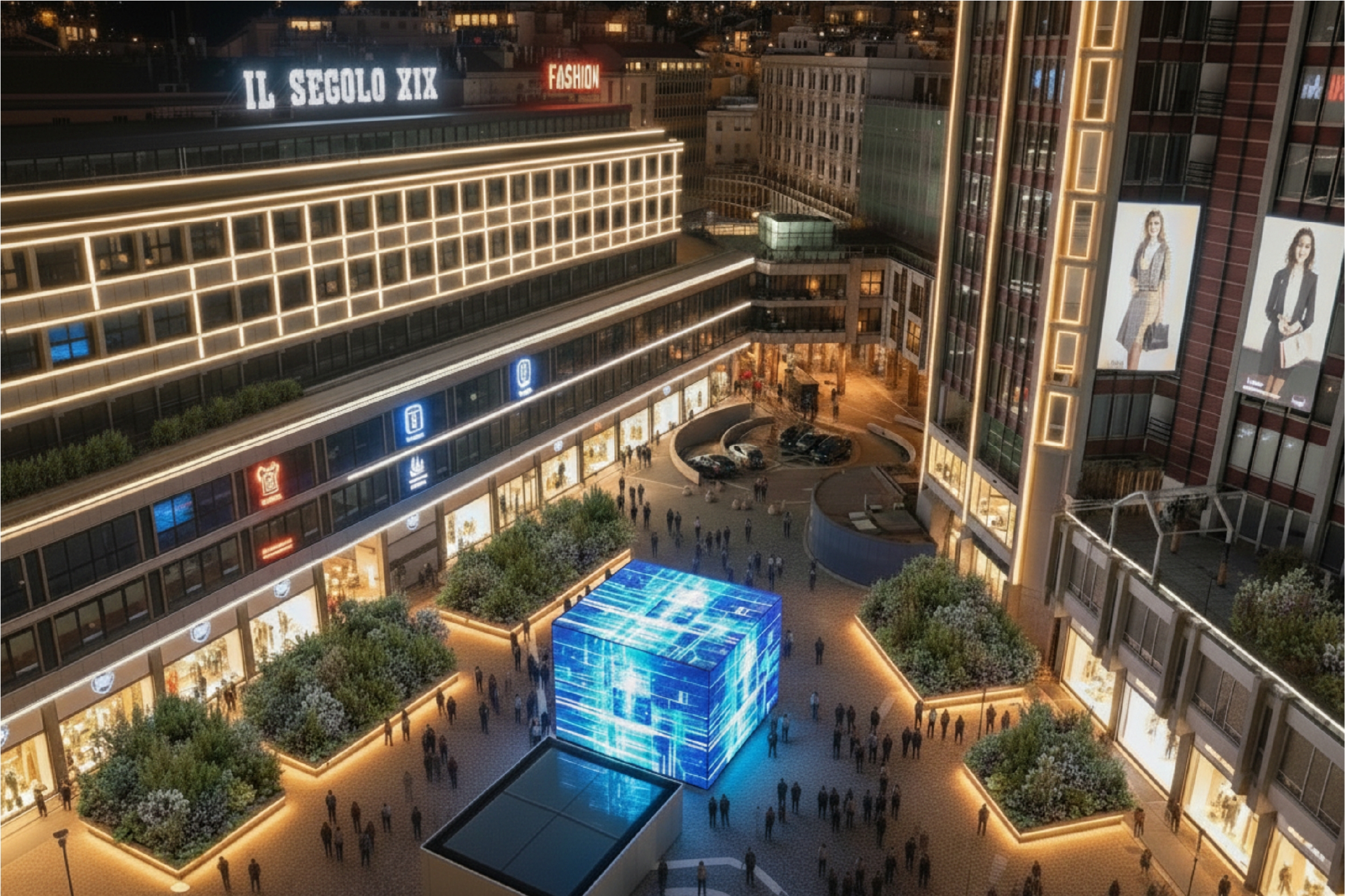
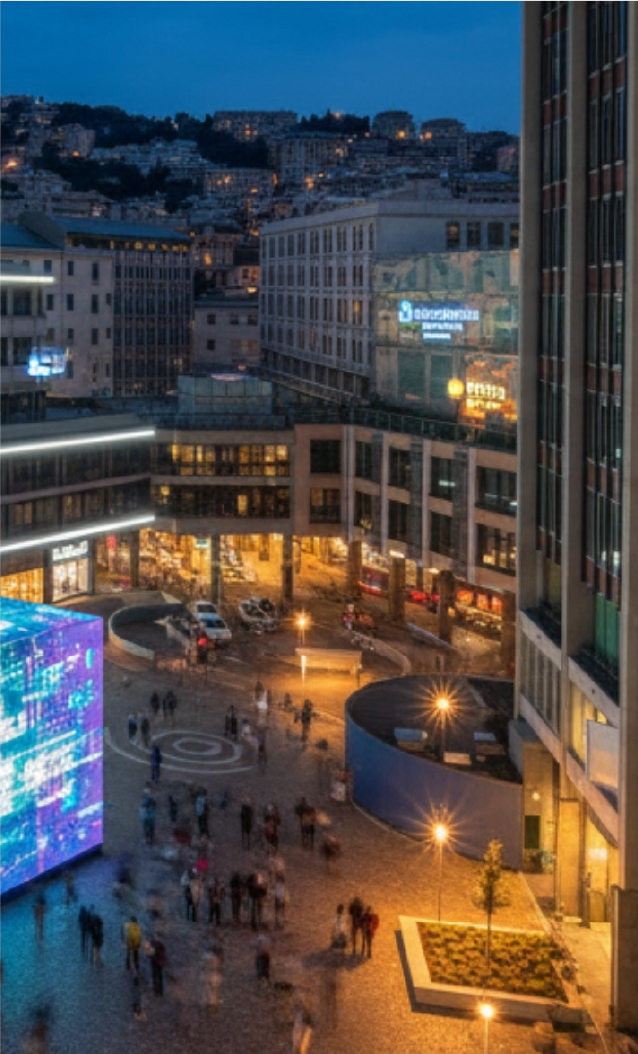
The Transformation Districts initiative introduces in Genova an advanced urban development framework based on data‑driven territorial analysis, integrated public–private governance, and value‑oriented enhancement of the built environment. The Portoria–Piccapietra–Pammatone cluster represents the first pilot application: a centrally located, fully serviced area characterized by high multimodal accessibility, consolidated tourist and professional flows, and an architectural fabric suitable for low‑risk, rapid‑deployment interventions.
Unlike conventional urban planning perimeters, the district operates as a functional and identity‑based management unit, designed to generate measurable value through coordinated oversight of uses, standards, and services. The model aligns with leading European soft‑regeneration strategies, aimed at increasing attractiveness, dwell time, and user experience quality without resorting to invasive construction or major physical transformation. In this sense, Transformation Districts act as light‑governance platforms, capable of delivering improvements in livability, urban reputation, and economic performance through targeted, scalable actions.
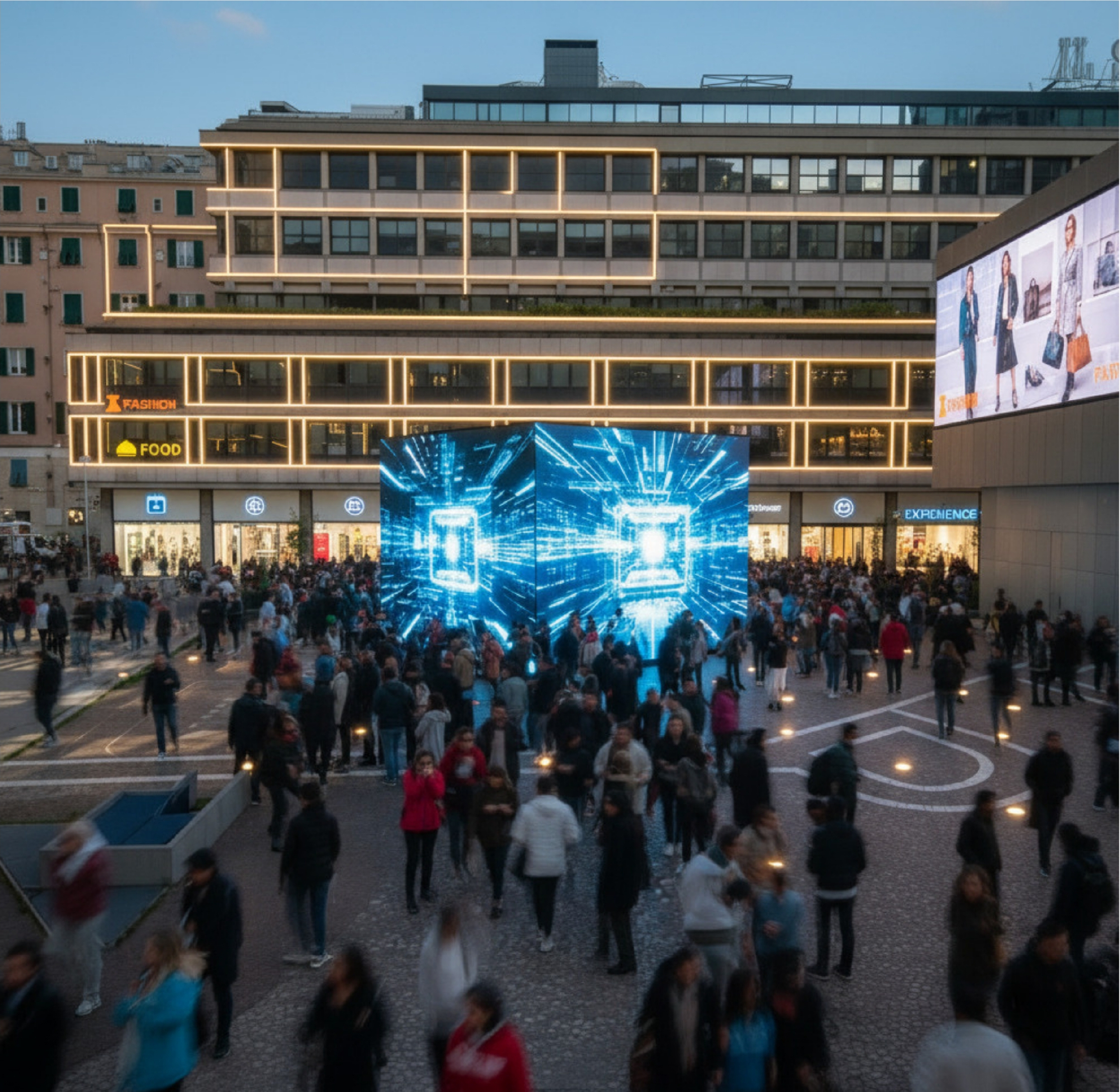
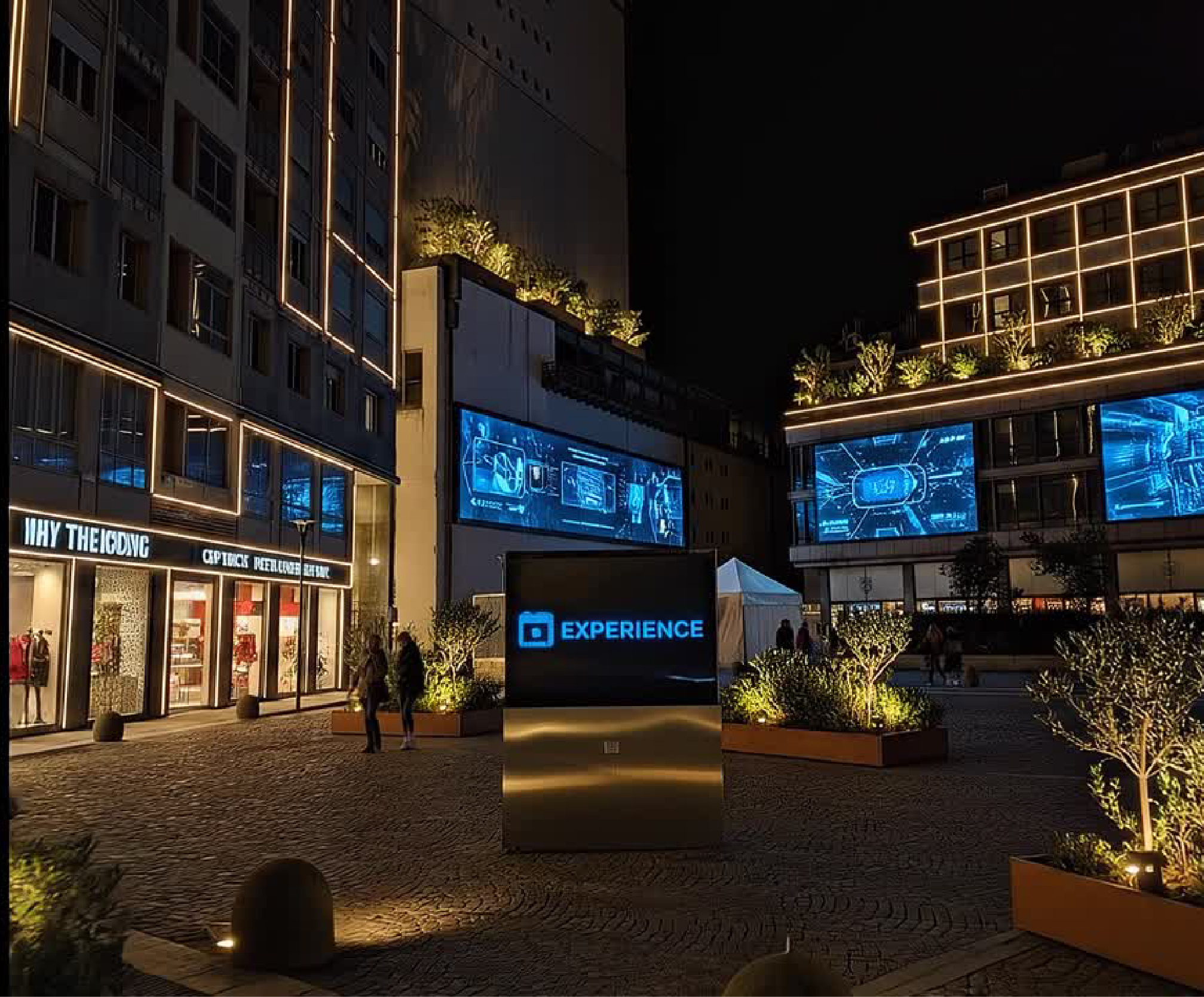
The target area is articulated into a system of specialized sub‑districts—Immersive, Atelier, Harmony, and Food Court—each with a primary yet complementary vocation. This structure supports a balanced functional mix designed to address all layers of the urban value chain: - Attraction: immersive experiences, digital technologies, cultural and experiential formats. - Conversion: high‑quality retail, advanced craftsmanship, hybrid commercial models. - Permanence: wellness, personal services, and proximity‑based functions. - Daily frequency: food destinations, informal sociality, and recurring consumption. The modular configuration allows for phased activation, ensuring temporal scalability, investment flexibility, and compatibility with public and private development timelines.
A key asset of the district lies in its ability to convert urban flows into qualified demand. Demographic and tourism analytics indicate a city center frequented by residents, city users, knowledge‑intensive workers, cruise passengers, and short‑stay visitors —profiles with high spending propensity in food, apparel, wellness, and entertainment. The district provides a coordinated response to this demand through integrated wayfinding systems, unified communication, legible pedestrian networks, and a consistent visual identity capable of guiding visitor behavior and strengthening the area’s market positioning.
The governance model is based on a public–private steering framework responsible for coordination, implementation management, and KPI monitoring. Indicators include footfall, dwell time, commercial conversion, perceived quality, and the performance of both public space and private operators. The district identity is further reinforced through targeted interventions on lighting, signage, digital media, temporary activations, and urban greening, increasing perceived safety, evening attractiveness, and the overall usability of public space.
The Portoria–Piccapietra–Pammatone demonstrator emerges as an investable, scalable, and replicable model, fully aligned with European principles on urban regeneration, economic resilience, inclusion, environmental sustainability, and data‑driven city management. The initiative highlights how Genova is evolving toward next‑generation urban districts, competitive at the European level and capable of generating both short‑term value and long‑term structural impact.